What Is the Best FPV Camera Angle?
The camera angle is in the end a personal preferences but it has to be set depending of your flight style and FPV niche, as well as to what type of quad you have and several other factors.
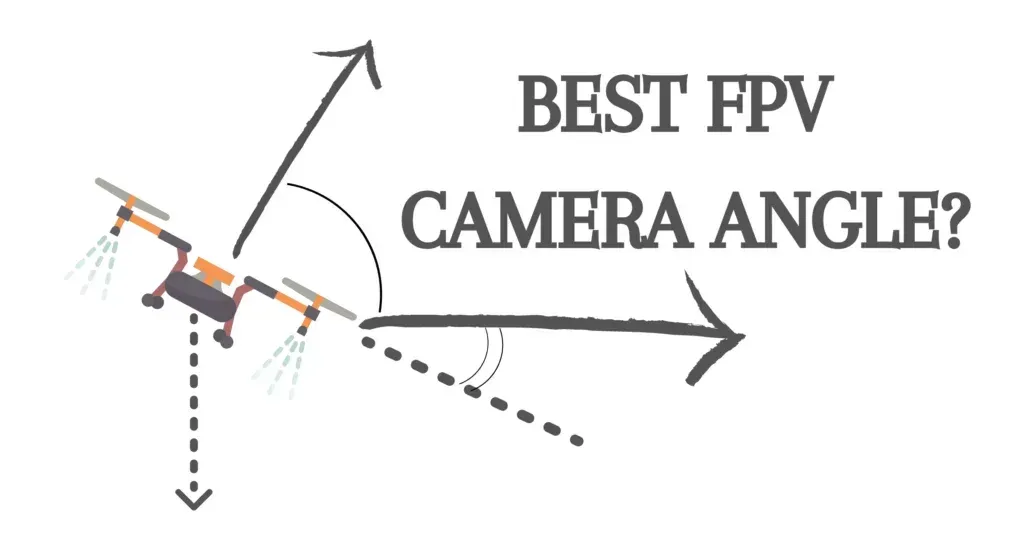
The camera angle of an FPV drone directly impacts how fast the FPV drone can fly. In order to fly forward, your FPV camera drone has to be set at a specific angle upwards to have a reference point: the horizon line.
The higher the camera degree on your FPV drone, the faster the drone will fly, following the horizon line as a reference point in the middle of the screen. But, in reality, what is the best camera angle you can set for your FPV drone?
Does it really depend on many factors, such as what you will use your drone for? Racing, freestyle, long-range flights? Fast or slow cinematic FPV? Indoors flight? Or simple free flights? YES!
This article was published originally in 2023 on FPVCraft, our other blog, and updated on the 28th of July 2026 when was transferred to FPVSchool.
In the meantime, I am going to give you an answer paragraph if you are only looking for a quick answer:
What is the best camera angle to fly your FPV drone?
- Racing: 45 degrees
- Freestyle: 25-30 degrees
- Fast cinematic FPV (cruising): 35 degrees or more
- Slow cinematic FPV (cinewhoop): 15 degrees or less
- Indoor flights (cinewhoop): 5 to 10 degrees
- Free flights: 10-30 degrees
- Tiny Whoops: 15-30 degrees
- Experimental: 0 degrees
To paraphrase this, there is no “rule” to use the exact camera angle degree for your FPV drone, as stated above.
Depending on many other factors, you need to set it somewhere around the values for the best results. Whatever value you set, practice it to improve your skills, as different camera angles may result in foreign control sensitivities in yaw, pitch, roll, and throttle.
For instance, setting the same camera angle on smaller quads or tiny whoops and then on a 5 inch, of course, logically, you will gain different speeds due to quad size and motors strength ratio.
But that is not all. once you get used to fly a specific camera angle and then get to other quads different camera angle, it will feel "strange", to say. In simple terms, freestyle and general quad control will feel different, whether is the same quad or different ones.
Camera angle also is known to have an impact on what rates and PID you use, but that's another topic for another time. Now let's see some of the facts that affect the camera angle.
What factors can affect the FPV drone speed at a specific camera angle?
When we have to set the camera at a specific angle for different types of flights, this may not always respond as we like.
For instance, a micro drone or 3-inch quad will respond differently if you set it at 30 degrees than a 5-inch quad. It is only logical. however, the basic control will feel similar.
The 5-inch quad has more power, is heavier, and will fly faster, perform sharper manoeuvres, etc.
But also we must take into account the field of view - even with the same camera angle, the perspective is different. This is excellent when you fly at higher angles especially freestyle and racing, but higher the speed - less stuff you see in your goggles.
The camera field of view
The camera field of view is a factor affecting your FPV drone speed at a specific camera angle. The lens field of view is reflected in the camera’s lens aperture.
A higher camera focal length (e.g., 3.0mm – which gives you roughly 110-120 degrees field of view) is set to be more sensitive to observe as gaining speed and maintaining a horizon level than a lower camera aperture (e.g., 2.1mm with 150-160 degrees field of view).
Although the field of view does not directly impact the drone’s speed as the camera angle, it does have an impact in perspective and to keep the drone stabilized at specific rates on that angle, which was a consequence of your flight style and maintaining the correct speed.
For example, it’s easier to maintain a constant speed with a 110-degree field of view, and at the same time, more challenging to keep the horizon level as the image you see through your goggles is “more magnified.”
A wider field of view (such as 150 degrees, for example) gives you more room to observe the surroundings. But it would be harder to observe obstacles when flying high speeds, so increasing the chances of crashing especially if you're not accustomed to fly as such.
However, due to a wide field of view, it is often perceived to fly at a lower speed than a narrower field of view, but in reality, the flight speed is roughly the same.
Motors power of an FPV drone
While flying at a higher degree angle (fast), an FPV drone’s motor powers directly affect gaining higher speeds. The higher the angle and the more powerful the drone motors are = the higher the speed.
It is to know that also, the more powerful the drone motors are, the more difficult it is to maintain the stability of the drone at lower speeds. Your throttle input will be more sensitive in this case.
That’s why even larger cinewhoop drones have lower values motors to help with stability at slower speeds. In cinewhoops you don't need speed, you need stability and smoothness.
Did you know you can limit the max throttle in Betaflight if you feel that your drone motors are too powerful, but that shouldn’t make any difference on the actual flight, but to the max throttle and actually to help you with throttle control?
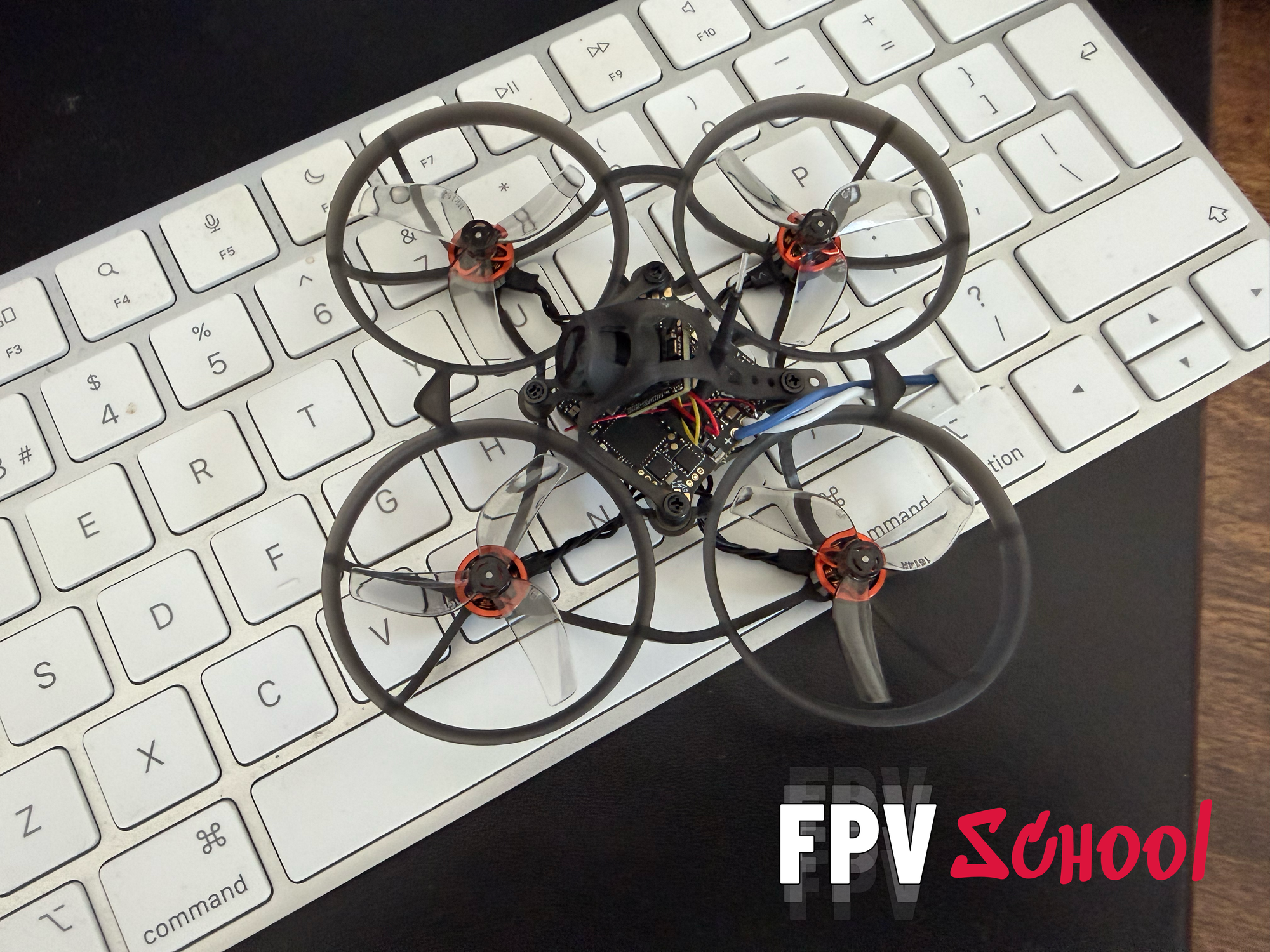
Tiny whoop used to have weak motors as the drone is small in form factor. That’s why you can fly microdrones indoors. But that started to change lately and for instance the Air65 or Air75 II Champion have really powerful motors for the drone of its size sending it to the sky like rockets. This is why, frankly, on the champion and freestyle versions the camera angle is steeper from factory.
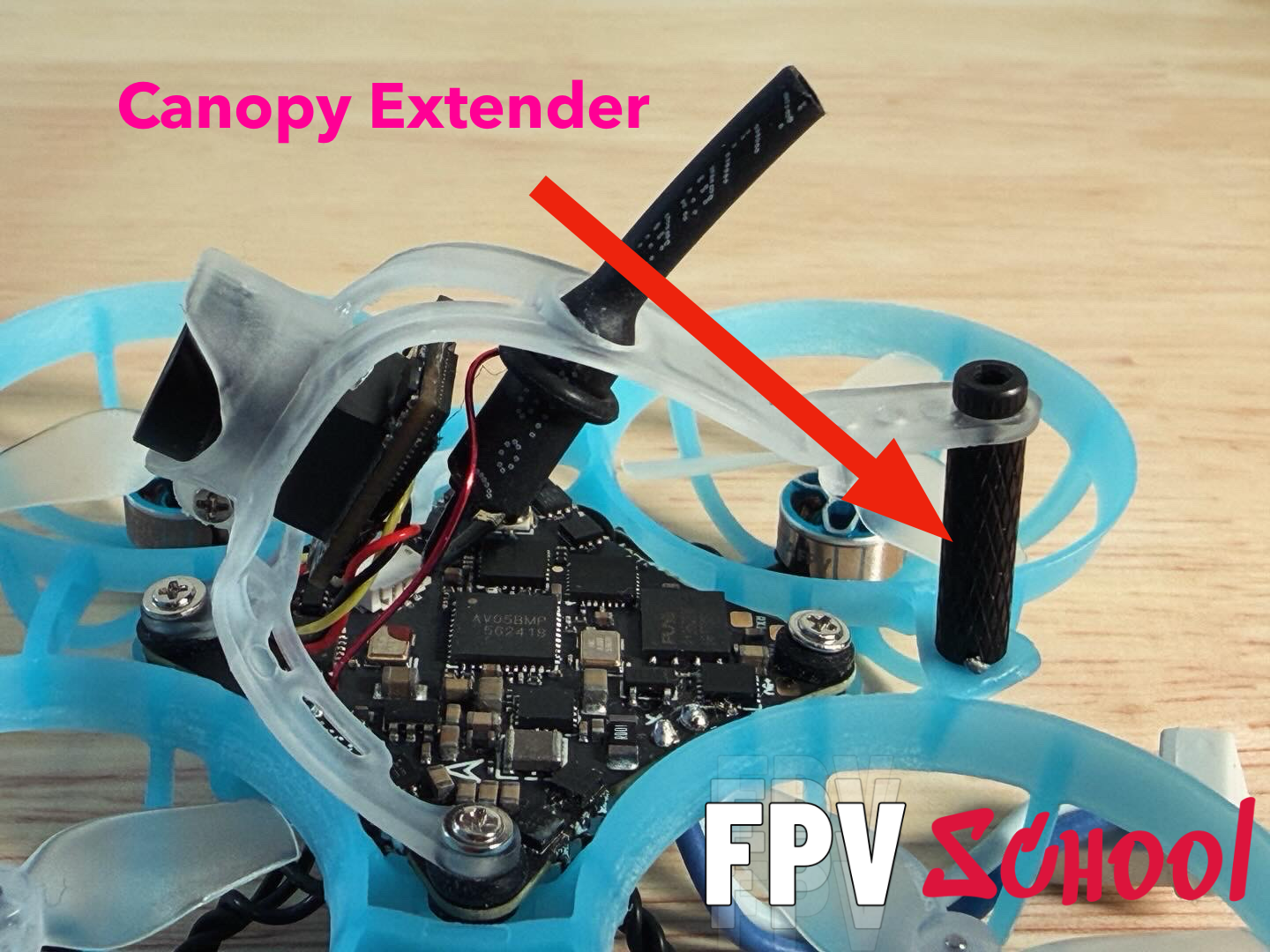
As a tip, because is not very intuitive to change the camera angle to these tiny whoops, you can "hack it" with some extender. Other pilots found different solutions. This is mine. And I can tell you, is so much smoother on the indoors but harder to hover and throttle control.
The aerodynamics and the weight of a drone
How a drone is constructed reflects on aerodynamics, which directly influences on having a specific flight speed at one particular camera angle.
I can give you a good example, and although other factors may contribute here, the DJI FPV drone is way faster than a traditional drone at, let’s say, 20 degrees angle, while with some other drones, at 20 degrees angle, you may have a smooth lower speed flight.
According to DJI.com, 0-10 degrees is slow flying, 11-20 degrees is fast flying, and 21-45 degrees is extreme flying.
In this case, the 20-degree camera angle on a DJI FPV drone is the barrier between fast and extreme flight speed, while to some other FPV drones, it classifies at medium flight speeds. - but the potato shape let the drone flow naturally in the air. Anyway, that was an old example and since the DJI FPV is drastically outdated, you can consider any other quad difference in size and power. So we have the aerodynamics, weight (free-fall (dive) speeds & recovery) and motor power, perception of the field of view.
The drone’s weight directly impacts flight time, acceleration, and maneuverability, affecting its agility and overall flight speed, particularly if we consider it a constant.
Your flight style and the horizon line position
Of course, those two factors have a massive impact on the FPV drone’s speed flying at a specific camera angle.
When you maintain a stable flight such as cruising, you keep a steady speed that can be lower or higher than what you can reach at a specific camera angle due to less maneuverability required and the current horizon line position.
To give you a more complex example of another flight style, but hectic, if you often pitch and adjust the horizon line up and down, the drone tends to accelerate and brake; however, the acceleration is generally at a higher rate than the breaking speed when you apply the gravity as a factor in some situations like diving or flying down a valley, which concludes in resulting from reaching higher speeds of the drone of a specific camera angle.
Now, what about the horizon line position?
The horizon level is the absolute main decisive factor in concluding the speed of your FPV drone at a specific camera angle.
If, for example, your FPV camera angle is set at 20 degrees, you gain a specific speed while maintaining the horizon level in the middle of the screen (standard). If you pitch forward and the horizon level line goes up, the drone gains speed (accelerates).
Maintaining a horizon level line above the middle of the screen from your FPV goggles is the same as flying your FPV with a camera set to a higher angle but having the horizon level line in the middle of the screen.
I often tend to fly with the horizon line above the middle except when cruising. I like to be in control of my speed no matter the camera angle I fly, but being an adrenaline junkie, I can't really fly that slow...
This goes the opposite way; if you decelerate and maintain the horizon level line below the middle of the screen, your FPV drone is slower, reflecting equally at the same as having a lower camera angle whilst the horizon line is in the middle of the screen.
Controllable free-falls
When your FPV drone is in free fall, and you align the direction correctly, the drone accelerates towards the ground, affected by gravity, which reflects on the drone’s weight.
The heavier the drone is, the harder it accelerates, and at the same time, the more difficult it is to stabilize it from the free fall.
Depending on your camera angle, the drone can be affected differently by its aerodynamics in free fall. Even after stabilizing it, the initial momentum gave the drone more speed than it naturally supports at your fixed camera angle.
Weather conditions
That would be another factor, simple to understand. Are you flying against the wind or with the wind? Is there no wind at all? The wind has a direct impact on the speed of your drone. But is so chaotic, especially for tiny whoop. A bad example flying against the wind, but is true - it affects the speed at the same camera angle as flying with the wind. Just simple physics and aerodynamics.
A humble conclusion
Mother physics teaches us that all those values and constants impact the flying speed of a drone at a specific angle.
As for setting the camera angle for your flight style, you must consider factors such as the weight of the drone, the aerodynamics, the motor’s strength, and your overall comfortable flight style.
Once more, those are not standard rules; they are merely guidelines. However, those are generally some common values most FPV drone pilots use.
Play safely with those settings and adjust them accordingly per your liking. Start with a lower camera angle if you are a beginner and go up, if setting it is not that complex.
The founder of FPV School Network.